ABOUT
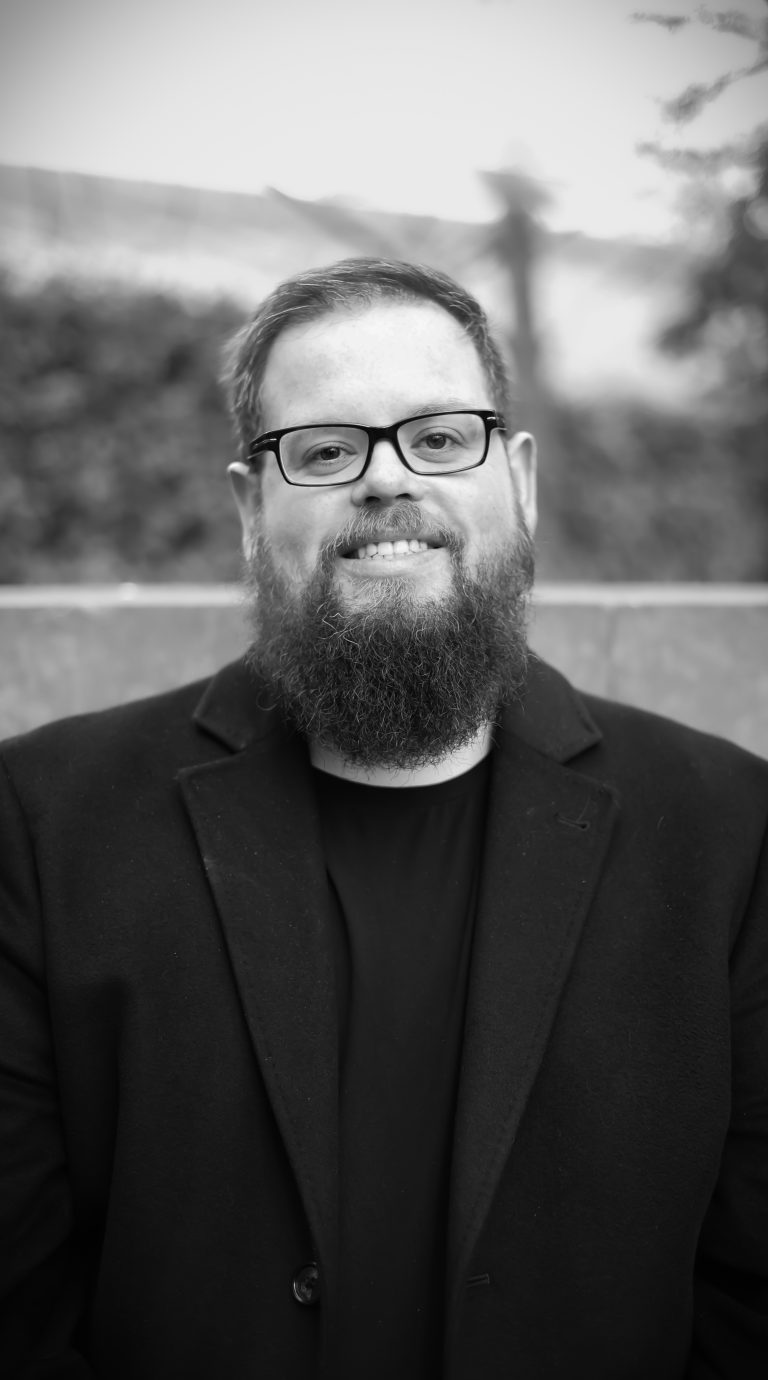
Dan Knowles
Psychosexual & Relationships Therapist · Person-Centred Counsellor · Clinical Sexologist · Supervisor in Training
I’m Dan. I’m a psychosexual and relationships therapist, person-centred counsellor and clinical sexologist. I am a queer-identified therapist and neurodivergent.
I came to this specialism through a combination of personal experience and professional need. Working with survivors of sexual violence, I kept noticing something missing: there was support for trauma, but rarely any space to address what that trauma had done to people’s relationships with their own sexuality and intimacy. That gap felt important. It still does.
“Every person has a unique experience in life, however sometimes there can be a shared understanding through similar experiences of being othered. For some people, this can be important in therapy, as we don’t feel the need to educate, to be understood.”
How I came to this work
I trained as a person-centred counsellor and began my practice working with adults and young people who had experienced sexual violence. That work shaped everything that came after. It taught me how profoundly trauma lives in the body, in relationships, in the way people understand themselves and how much courage it takes to sit with any of it.
But I kept encountering something I couldn’t fully address within general counselling: the impact of trauma and shame on people’s intimate life and their relationship with sexuality. Clients were healing in some respects and still struggling profoundly in others. I wanted to be able to offer something more complete — which led me to psychosexual therapy and clinical sexology.
That training opened up a much broader practice. I began working with clients on the full range of sexual and relational concerns, not just in the context of trauma, but desire, identity, shame, relationship structure, kink. I found that the clients who often struggled most to find the right support were those whose lives sat outside the mainstream: queer people, neurodivergent people, those in non-monogamous relationships, those in kink communities. People who had learned, often through painful experience, that therapy wasn’t always a safe space for who they actually were.
Being queer and neurodivergent myself means I’ve navigated some of those same questions of identity and belonging. I’m not going to pretend my experience maps directly onto yours, it doesn’t. But it means there are things I don’t need explaining, and a quality of understanding I can bring that goes beyond training alone.
HOW I WORK
• Person-centred foundation
You lead. Your pace, your priorities, your goals. Always.
• Sex-positive & kink-aware
No judgement about any aspect of your sexual life, identity or practice.
• Genuinely LGBTQ+ affirming
Not performatively inclusive, and with lived experience.
• Neurodivergent-informed
Working with how your brain works, not against it.
• Trauma-aware throughout
Whatever brings you here, trauma-informed practice underpins everything.
Training & qualifications
My clinical training spans person-centred counselling, psychosexual therapy, relationships therapy and clinical sexology, alongside specialist experience in trauma, sexual violence and working with young people. I’m currently completing my qualification as a clinical supervisor, and I’m looking forward to extending the same quality of thinking and care to the therapists who do this work themselves.
I’m interested in narrative therapy, the idea that the stories we tell about ourselves shape what feels possible, and while I don’t practise as a formal narrative therapist, that lens informs how I think about identity, change and what it means to rewrite a chapter you’ve been stuck in.
My training includes a thorough grounding in sexual dysfunctions and disorders, and I draw on that knowledge when it’s useful. But I’m wary of leading with diagnostic frameworks, they can pathologise experiences that are entirely understandable given someone’s history, culture or circumstances. What I’m more interested in is what you actually want, what feels out of reach, and what might be getting in the way.
I’m genuinely committed to continuing to develop, to sitting with challenge and uncertainty, and to integrating new thinking into how I work.
Qualifications
• L7 PgDip Counselling Psychology
Keele University
• Diploma in Clinical Sexology
Contemporary Institute of Clinical Sexology (CICS)
• Trauma informed practice
Savana (North Staffordshire Rape Crisis)
• Working with children
Savana (North Staffordshire Rape Crisis)
• Diploma in Clinical Supervision
Currently on-going (CICS)
POSITIONALITY
Why my identity matters in this work
I’m a white, male-presenting, queer, neurodivergent, working-class person, and I think it matters to say that plainly. Those parts of my identity inform how I understand power, difference and the experience of not quite fitting, and they show up in how I work, even when we’re not talking about them directly.
My practice is rooted in anti-oppressive principles, which means I’m actively working to understand how power, systemic inequality and marginalisation shape the experiences people bring to therapy.
I work with people from all backgrounds and identities. But if you’ve spent time in therapy rooms where you had to make yourself smaller, more ‘acceptable’ or less complex before the work could begin, that’s exactly what this practice is designed to change.
Working with me
Sessions are 60 minutes and available online across the UK or in person in Staffordshire. I work with individuals, couples and polycules.
I offer a free 20-minute initial consultation — no obligation, no pressure. It’s a chance to get a sense of who I am and how I work before committing to anything.
BEYOND THE THERAPY ROOM
Beyond the therapy room
I have an interest in creative approaches to therapy, especially with young people. Therapy doesn’t have to look like sitting across from someone and talking, although a lot of times it does, and that’s great. Sometimes it looks like something else entirely. I’ve worked with young clients using creative methods including art, play and Minecraft. Meet people where they are: that’s the principle.
Alongside my therapy practice, I have experience delivering sex education and workshops on consent and healthy relationships in schools, and providing training to organisations and businesses on topics including LGBTQ+ inclusion and neurodiversity. This work grew out of my time in the charity sector and reflects something I feel strongly about: that good information, delivered without shame or judgement, changes things long before people ever need to sit in a therapy room. It’s work I’m actively looking to develop further.
I’m also a CEOP Ambassador, reflecting a long-standing commitment to child protection and online safety education. Alongside my private practice I work part-time for a bereavement charity supporting young people, which keeps me closely connected to CYP work.
I have also worked as a consultant to organisations navigating complaints of sexual harassment, supporting them to respond appropriately and consider what systemic change might be needed.
I’m currently working to develop a bibliotherapy group, using literature as a way into conversations about identity, experience and what it means to see yourself reflected in a story. It’s early days, but it feels like an important extension of what therapy can be.
Professional memberships & accreditation
These are your assurance of professional standards, ongoing supervision and ethical practice.
MBACP
Registered member
COSRT
Registered member
Ready to take the first step?
Getting in touch is often the hardest part. A free 20-minute consultation costs nothing and commits you to nothing — it’s simply a conversation to see whether working together might help.